Western Kenya’s Soil Comeback: How Farmer-Led Networks Are Rewriting the Future of Agriculture
Western Kenya’s farmlands have long been known for their fertile soils and abundant harvests. But in recent decades, that image has been fading. Soil degradation driven by continuous mono-cropping, over-reliance on chemical inputs, and changing climate patterns has left many small holder farmers in Bungoma and Siaya counties battling falling yields, stubborn weeds like striga, and deepening poverty.
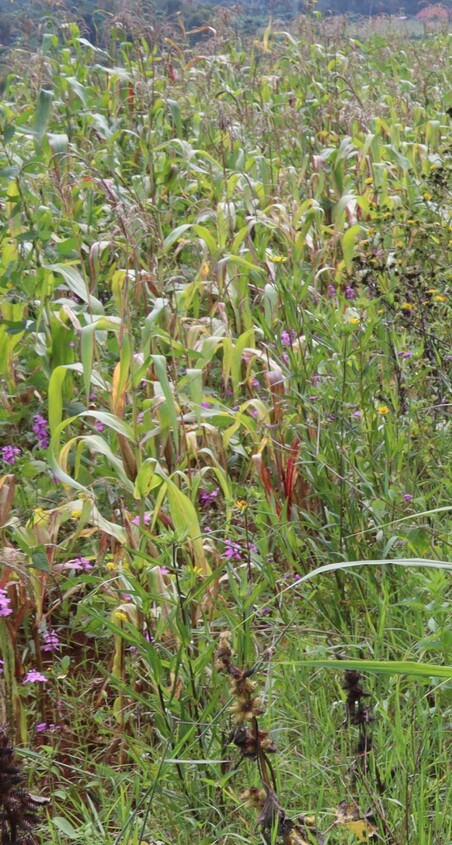
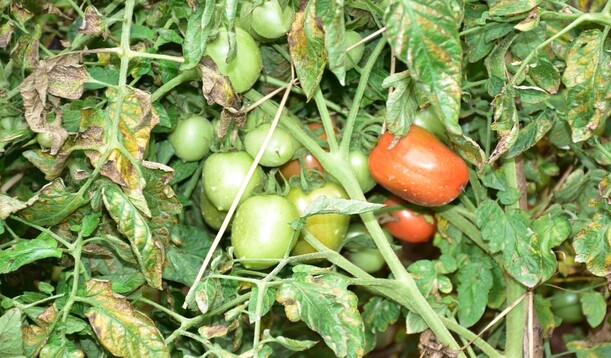
A farm affected by striga in SiayaNow, a farmer-led transformation is quietly reversing that trend. On small plots, often less than an acre, farmers are experimenting with agroecological practices that build soil fertility, boost yields, and restore resilience all without the costly chemical inputs that have kept many trapped in debt.
At the centre of this change is the ProSoil project, a German-funded initiative under GIZ implemented locally by Eco-Sustainet in partnership with local Community Based Organisations like Tembea Youth Centre for Sustainable Development in Siaya and Community Research in Environment and Development initiative in Bungoma. What makes it different is its approach: knowledge flows from farmer to farmer, innovations are tested in the soil rather than in labs, and the solutions are rooted in what farmers already have at hand.
This is the story of how three farmers a pioneer, a full adopter, and a once-sceptical observer are showing that the future of Western Kenya’s food security might just grow from the ground up.
1. The Day the Soil Turned Green
BUNGOMA, Kenya —
At 9 a.m., the sky over Nabwela village in Knduyi is sharp with heat, the kind that used to bake the soil hard by mid-morning. But as you step into Mr. Kaipas Juma’s compound, the air feels cooler. The shade from the agroforestry trees softens the light, and the smell of damp earth hangs in the air.
The ground beneath his crops is blanketed with mucuna vines. To the uninitiated, it looks risky. mucuna is notorious for choking crops. But here, it’s under control .
Over 40% of agricultural land in the region is moderately to severely degraded.
Striga weed affects up to 80% of maize farms in some parts of Bungoma and Siaya.
Farmers have seen maize yields fall from 15–20 bags/acre to as low as 5 in degraded plots.
Losses from soil degradation cost Kenya an estimated KSh 70 billion annually (about 3% of GDP).
With these, statistics in mind, the need for change has always been desperately requested by the local farmers.
2. The Farmer-Led Model
The ProSoil project rejects the “one-size-fits-all” approach. Instead, it creates learning loops within communities where one farmer’s success becomes another’s blueprint.
“From the start, we knew sustainability would come only if farmers owned the process,” says Dr. Ayaga, Eco-Sustainet’s team lead. “We didn’t come here to run farms. We came here to make farmers the experts.”
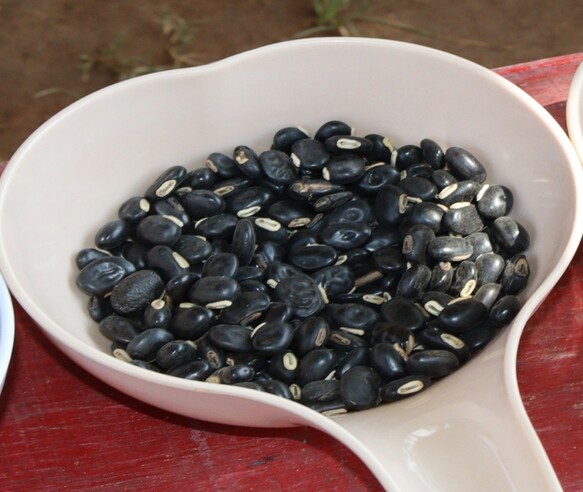
Mucuna, also known as velvet bean, is a versatile leguminous cover crop with numerous benefits for soil health and agricultural systems. It's known for its rapid growth, nitrogen-fixing abilities, and weed suppression, making it a valuable tool for sustainable agriculture.
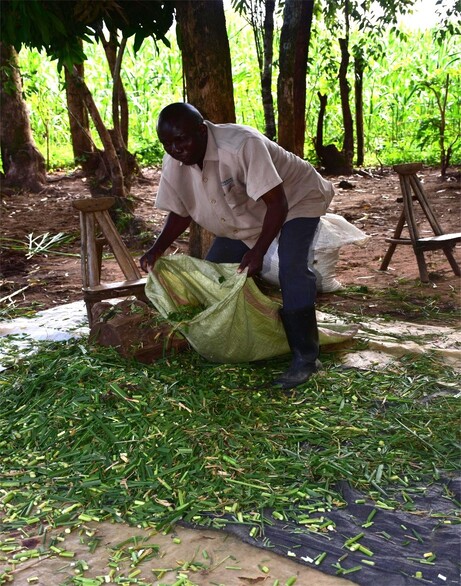
Harvested mucuna grains/seedsWith all these benefits, mucuna brings with it a greate challenge when planted with other crops especially maize due to its coiling nature that makes it smother maize when not taken care of.
However,Juma’s mucuna innovation is now the talk of agricultural extension officers in the county.
Like he says, mucuna brings with it so much work and the farmer has to visit the farm regularly to take care of it, but still the benefits are worth it.
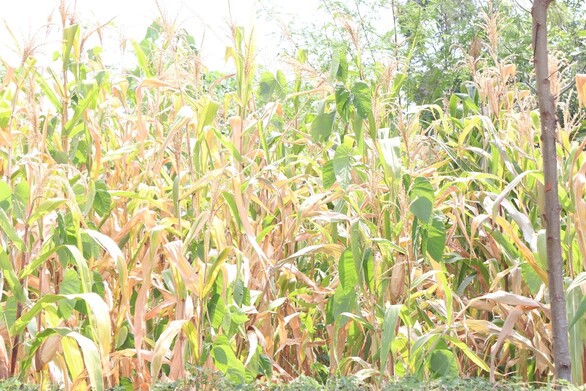
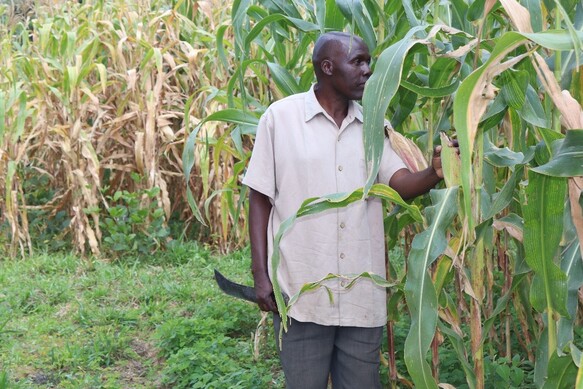
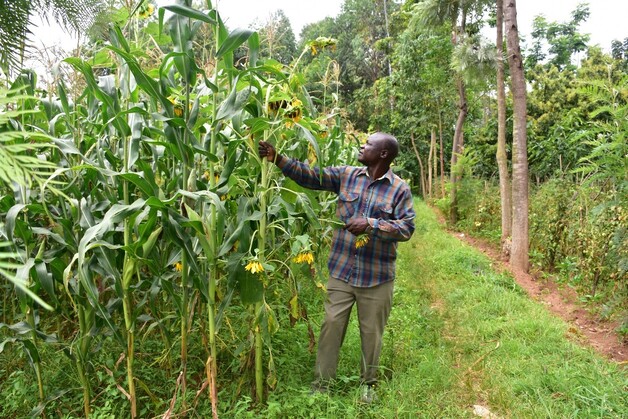
Mr Kaipas Juma inspecting his maize plantation“A farmer has to be hard working always and it is only the lazy farmers who would complain about the nature of mucuna considering the benefits it brings. I prune it every two weeks,” he explains, cutting a vine with a panga. “It keeps the ground covered but doesn’t smother the maize.”
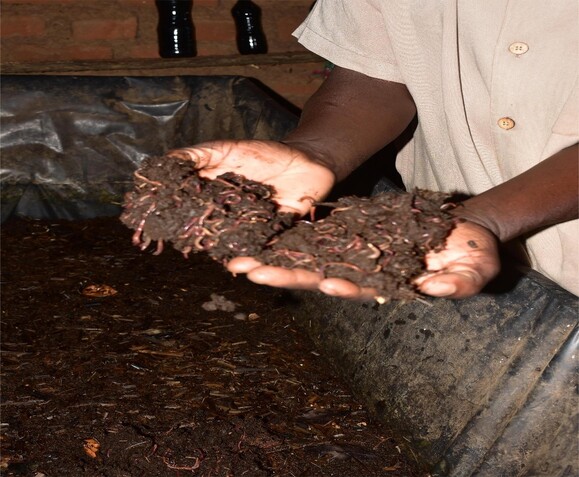
The soil is dark and crumbly. Earthworms wriggle just beneath the surface a sign of good health. Juma says his yields have nearly doubled since he began, and his chemical fertilizer bill has dropped by half.
4. Walubengu’s Model Farm
On a slightly larger plot, Mr. Walubengu and his wife have turned their farm into a living agroecology textbook.
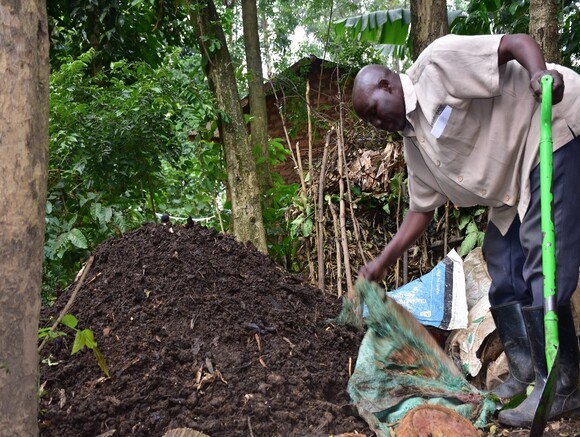
They’ve adopted all six core ProSoil technologies and keep records of each. Visitors can walk from a push-pull maize plot into a vermi-compost station, then over to a diversified garden where beans, groundnuts, and cassava grow side by side.
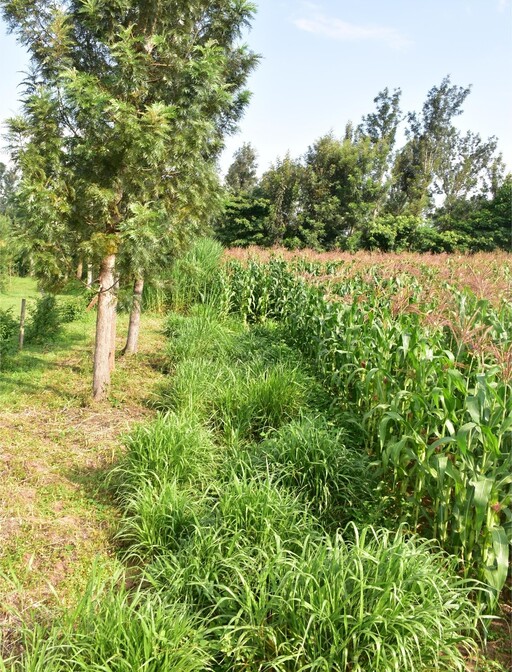
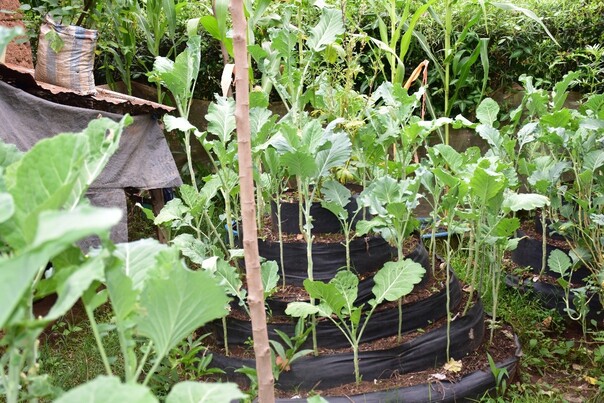
Part of Walubengo’s farm showing some of the adopted technologies“When my wife joined, everything changed,” Walubengu says. “We plan together, and she manages the compost pits. I have also managed to engage my children in looking for the organic materials meant to make compost manure and vermi-compost.”
For years, Charles Wafula stuck to conventional maize monoculture until he noticed the difference next door.
“I thought maybe Walubengu had better soil,” Wafula says. “But season after season, his maize was stronger, his beans healthier.”
Wafula started copying quietly: first mulching, then composting, then conservation tillage. Within two years, his output had grown enough to sustain his requirements at home and sell maize for cash. Today, he has been able to accommodate more crops and even welcomes visiting farmers explaining exactly what he learned from Walubengu.
“Since there is so much trees around and birds are a nuisance to my maize, I have braught in the aspect of intergrating sunflower with maize for it to become a distraction to the birds.” Says Wafula.
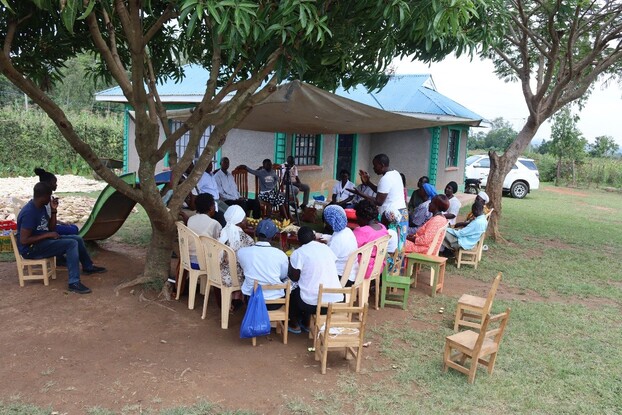
In Siaya’s Pur En Mwandu Farmer Group, supported by Tembea Youth Centre CBO, members sit in a circle under a massive fig tree, passing around a ledger book. One woman deposits KSh 200 into the VSLA fund. Another signs out a small loan.
The main thing that brings this group together remains farming. They have been able to find a way of accomadating each other and ensure they strengthen the bonds towards a common goal of abundant yields.
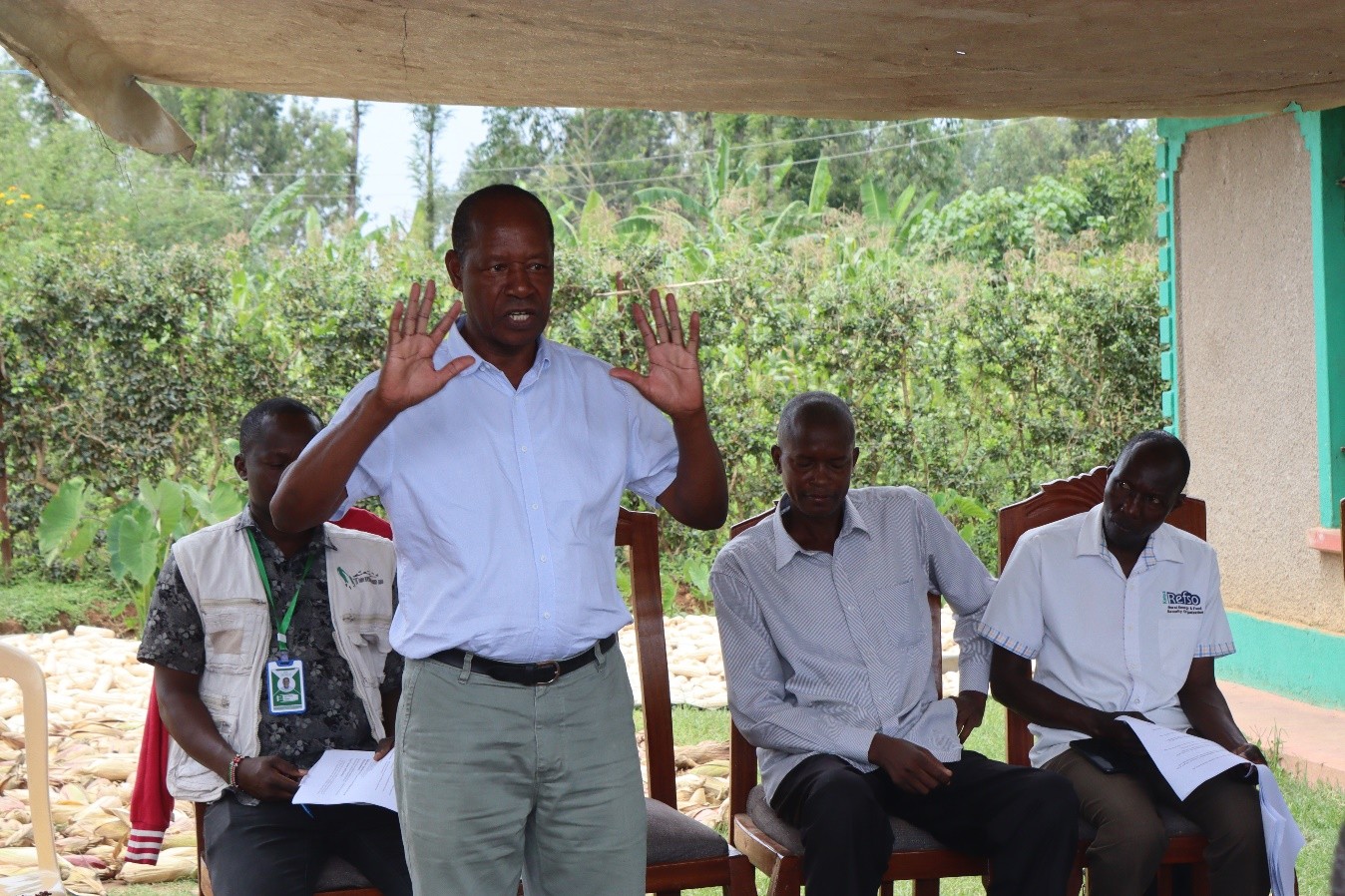
Pure n Mwandu Group During one of their meetings“Before, we each struggled alone,” says group chair Pamella Onyango. “Now, when someone tries something new, we all learn from it and we currently take care of our joint farms together in turns”
They have also been able to understand the business aspect of the model
“The groups are seeing this as business,” says Joshua Amollo Project Officer Tembea. “Some are making money selling compost or vegetables. That’s how you keep them in agriculture.”
With this, the group members insists that their sustainability is guaranteed even after the project
7. Siaya’s Fight Against Striga
Even though striga remains to be a menace to many farmers in western kenya, the farmaers who have adopted these techniques says their once unproductive farms have regained health and are currently clean from striga
While acknowledging the project, Siaya County CEC Agriculture Sylvester Kokoth says that there is a sign that the organic methods are working and this has made them adopt the methods through the county extension officers
“We are starving striga by building the soil. Healthy soils make it hard for the weed to survive.” Sylvester Kokoth, CEC Agriculture, says:
He notes the policy alignment: “This fits perfectly with our climate-smart agriculture strategy. We’re improving yields, nutrition, and resilience at the same time.”
8. Cultural and Gender Hurdles
Farming has always been considered the most informal job by many people and in a many occasions coming up with unique adoptions brings so much speculations moreso within the communities
In Bungoma, early adopters face ridicule. “They called me a joker,” Juma says. “Now they want my seeds.”
In Siaya, gender norms mean some women must seek permission before changing farm practices. “It slows us down,” Pamella admits, “but when the results show, the men agree.”
9. Technical Corner: How It Works
These adoptions from observation requires much commitments for their success and there are technicalities involved in each and every technique. Some of them are broken down as follows
Mucuna Pruning: Cut every 14 days to control climbing.
Vermi-Juice: Red wiggler worms break down waste; collect liquid for fertilizer/pesticide.
Push-Pull: Desmodium between maize repels pests/striga; napier grass borders lure them away.
10. Scaling Without Losing Quality
Kenya loses 3% of GDP annually to soil degradation. If Bungoma and Siaya’s peer-to-peer model keeps working after donor exit, it could be a blueprint for other counties.
But Kokoth warns: “Scaling must be deliberate. If we grow too fast without governance, we risk losing trust.”
Standing in his field, Juma looks over the rows of healthy crops, the green cover of Mucuna quietly nourishing the soil beneath.
He bends down, scoops a handful of rich, dark earth, and lets it fall slowly through his fingers.
“The soil is our bank,” he says with a faint smile. “If we feed it well, it will always pay us back.”
Around him, the hum of insects and the soft rustle of leaves mark the return of life to land once thought exhausted.
What began as small, tentative steps by a few determined farmers has grown into a movement built on trust, shared learning, and the confidence that the answers lie in their own hands.
As the sun dips behind Bungoma’s hills, the promise is clear: Western Kenya’s soil is learning to breathe again and with it, the hope of harvests for generations to come.


Comments