
USING RADIO TO STRENGTHEN CLIMATE RESILIENCE IN SIAYA COUNTY
When BBC media Action’s BRIDGES project set out to build climate resilience across developing countries, its ambition was to equip farmers, fisherfolk, pastoralists and those living in informal settlements with the knowledge, confidence and tools to adapt to rapidly changing climate with the aim of shifting how communities think, decide and act in the extreme weather conditions.
The effects of climate change are severe with unpredictable rainfall patterns, floods, prolonged droughts, declining fish catches and soil degradation which continue to threaten livelihoods.
To address these challenges, the BBC Media Action Bridges Project has been working to strengthen the use of Weather and Climate Information (WCIS), ensuring communities understand early warning systems and take informed actions to protect their livelihoods.
It is within this vision that Tembea Radio introduced Rameny Lwasi, a community radio program that has for nearly two years become a trusted voice on climate change, weather information and environmental conservation in Siaya County.
Broadcast through Tembea Radio under the support of the BBC Media Action Bridges Project, the program has consistently translated scientific weather information into simple local language discussions that ordinary community members can understand and apply in their daily lives.
For its success the program has been collaborating with experts such as the Director of the Kenya Meteorological Department (KMD) Siaya County Mr. Domnic Arodi through regular discussions on seasonal weather outlooks including the 2024 October- November- December (OND) forecast, the 2025 March- April- May (MAM) forecast, the 2025OND outlook and the 2026 MAM seasonal forecast and through these on air discussions, listeners have been receiving timely and reliable weather information that is helping them make better decisions.
The BBC Media Action objectives emphasizes helping communities understand climate change, trust scientific weather information and adopt adaptive practices that strengthen resilience. Through Rameny Lwasi, these frameworks are gradually becoming reality in Siaya county.
For years, many farmers relied solely on traditional knowledge and routine planting calendars. But today, several are adjusting their farming decisions based on weather forecasts shared during the program.
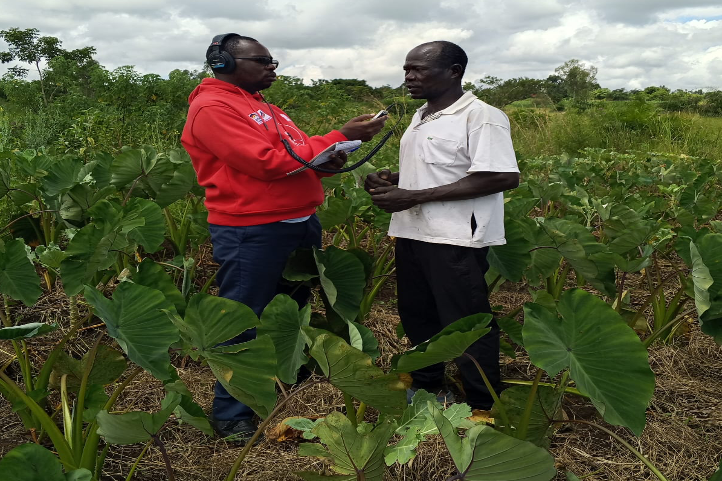
In Ugunja, farmer Peter Odhiambo who is known to other listeners as Odhiambo Jasamba says the 2026 MAM seasonal forecast changed his entire farming strategy. After hearing experts on rameny lwasi explain that Siaya County was expected to receive above average rainfall, he decided against planting maize and beans on his waterlogged farm as he had always done. Instead, he planted yams. Months later, while neighboring farms struggled with excess water and poor maize yields, Jasamba’s yam thrived.
“The weather information helped me decide what was suitable for my land,” he explains. “Now my farm is doing much better.”
Another farmer, Nyakwar Ajwala used the same forecast information differently. After listening to the program, he planted vegetables one week before the onset of the rains. His crops matured earlier than those of other farmers, enabling him to sell produce in the market before supply increased.
As a result, he earned higher profits. For him, the program transformed weather forecasts from mere announcements into economic opportunities.
Wuod Nyakawino, another loyal listener also embraced early planting after following discussions on seasonal forecasts. By the time many farmers were still waiting for their crops to mature, he had already started harvesting beans with impressive yields.
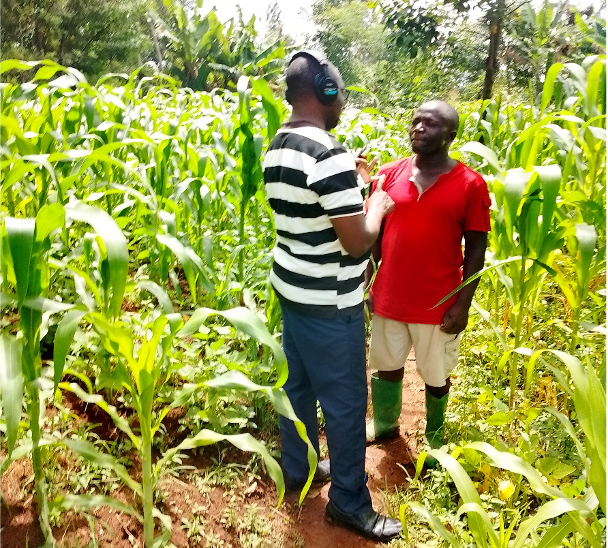
These actions directly align with the Bridges Project objectives of encouraging communities adopt adaptive and protective practices that help them cope with extreme weather events.
The program has also played an important role in changing perceptions about climate change itself. Many listeners who previously viewed climate change as a distant issue or natural punishment now understand it as a real environmental challenge that requires action and preparedness.
Community discussions have encouraged people to share knowledge, verify misconceptions and participate in environmental conservation efforts.
Experts featured on the program continue to educate listeners on suitable farming, tree planting, water conservation, environmental protection and disaster preparedness.
The program has become a bridge between scientific institutions and ordinary citizens. It has empowered farmers to make informed agricultural decisions, helped fishermen stay safe, encouraged environmental conservation and strengthened community resilience against climate related disasters.
If the impact of Rameny Lwasi on agriculture is measured in yields and profits, its impact is the most effective tools for local transformation. It is a bridge of information, adaptation and hope.
Comments