

Ruto Launches Ksh 70 Million Sidindi Market to Boost Trade in Siaya
President William Ruto on Sunday launched the construction of the Sidindi ESP Market in Ugunja Sub-County, Siaya County, in a project expected to transform local trade, boost farmer incomes, and create hundreds of jobs in the region.
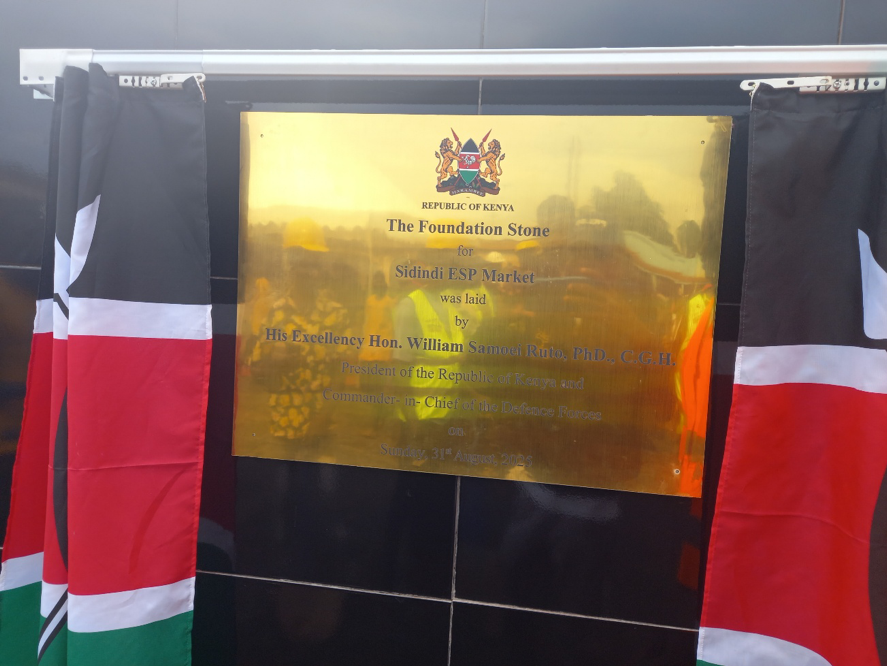
The project, which has been allocated Ksh 70 million, is scheduled to be completed within four months under the supervision of the State Department for Housing and Urban Development. Speaking during the launch, President Ruto said the market is part of the government’s broader plan to modernize trading spaces across the country in line with the Bottom-Up Economic Transformation Agenda (BETA).
“We are here today to keep our promise to the people of Siaya. This market will give traders a safe, modern, and dignified environment to do business. We have allocated Ksh 70 million for this project, and within four months, the people of Sidindi will have a facility that matches their hard work and aspirations,” said President Ruto. He further directed the contractor, M/s Gurey Africa Limited, to prioritize the use of local labour and materials in order to empower the community economically during the construction phase. “Let the money we invest here circulate within Ugunja. Employ the local youth, use the local materials, and ensure that this market reflects the character and potential of the people who will use it,” he added.

The President revealed that the Sidindi Market is one of 18 modern markets the national government is building in Siaya County. Among them is the Ugunja Municipality Modern Market, which will cost Ksh 350 million and is expected to commence construction within the next two months. “These investments are not just about infrastructure; they are about empowering families and transforming grassroots economies. The Ugunja modern market will be one of the largest in this region, creating a trading hub that will serve thousands across Siaya and beyond,” the Head of State explained.
Siaya Governor James Orengo, who also attended the launch, welcomed the project and pledged his administration’s full support in ensuring its successful implementation. He assured the President that the county government will work closely with the State Department for Housing and Urban Development to provide the necessary facilitation, including infrastructure and services, to make the project a success.
“This is a timely investment for our people, and we are grateful that the national government has chosen Sidindi for such a transformative initiative. As a county, we will do everything within our means to complement this project, from providing utilities to supporting traders once the market is complete. Together, we can ensure that this facility truly transforms lives,” said Governor Orengo.

The Sidindi ESP Market will be equipped with modern facilities designed to meet the needs of traders and farmers. These include smart stalls, cold and dry storage rooms, an ICT hub, a children’s play area, a social hall and meeting facility, administrative offices, ablution blocks, a mothers’ room, a food court, garbage receptacles for waste management, and open vendor spaces. The market is designed to accommodate between 300 and 500 traders, providing adequate space for general produce, fresh produce, household goods, mitumba, and Jua Kali artisans.
Also present during the launch was Jared Buoga, the Nyanza Regional Director, State Department for Housing and Urban Development, who urged the local community to embrace the project by offering services and labour to the contractor. “This market is not just for traders; it is for everyone in Sidindi and Ugunja. It will provide opportunities for farmers, service providers, artisans, and transporters. We encourage residents to step forward and take part in the construction process so that the benefits stay within the community,” he said.

Buoga noted that the project has already been designed with inclusivity in mind, reserving at least 30 percent of trading spaces for women, youth, and persons with disabilities. He added that the market will be a game-changer for local agriculture and food security. “By integrating cold and dry storage facilities, we expect to reduce post-harvest losses by up to 30 percent. This will directly benefit more than 750 farmers in the area who will now have reliable outlets for their produce,” he explained.
According to official estimates, the construction phase alone will employ over 150 workers daily, while the market will generate more than 500 permanent and indirect jobs upon completion through retail, logistics, cleaning, security, and facility management. Additionally, the Siaya County Government expects a 25 to 30 percent increase in revenue from structured rentals, licenses, and levies due to enhanced compliance and formalization. For local artisans, the market offers a fresh opportunity to showcase and supply their skills. At least 50 informal sector workers are being integrated into the project through the fabrication of stalls, grills, gates, and signage. They will also benefit from structured skills transfer programs, strengthening the Jua Kali sector and ensuring long-term sustainability.
The Sidindi ESP Market is a critical component of the Kenya Kwanza government’s BETA plan, which emphasizes agricultural productivity, local enterprise support, and grassroots economic empowerment. The project also aligns with several United Nations Sustainable Development Goals (SDGs), including SDG 1 on ending poverty by creating jobs and supporting livelihoods, SDG 2 on achieving zero hunger by reducing post-harvest losses and improving market access for farmers, SDG 8 on decent work and economic growth through local employment and entrepreneurship, SDG 9 on innovation and infrastructure through modern facilities and ICT integration, and SDG 10 on reducing inequalities by reserving spaces for women, youth, and persons with disabilities.
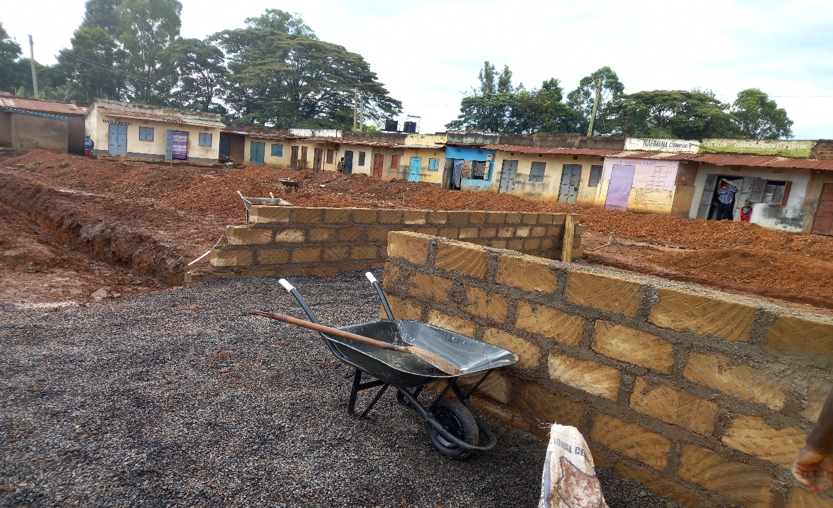
Residents of Sidindi and surrounding villages expressed optimism about the project. Many said the new market would provide a safe and clean environment compared to the current informal trading spots. “I have been selling vegetables by the roadside for years, sometimes under the rain and dust. A modern stall with storage facilities will help me preserve my produce and serve customers better,” said Mary Achieng, a trader from Sidindi. For young people, the project represents hope for employment. “If the contractor hires local labour, it means young men and women in Ugunja will finally have something meaningful to do. It will also put money in our pockets,” said Kevin Otieno, a boda boda rider who plans to take part in the construction.
As construction begins, both the government and the community are optimistic that the Sidindi ESP Market will mark a turning point for trade in Ugunja Sub-County. President Ruto concluded his address by reaffirming his administration’s commitment to supporting small traders and farmers through infrastructural development. “Our government will continue to invest where it matters most — at the grassroots. Projects like the Sidindi Market are the foundation of a prosperous Kenya where every hustler has a chance to thrive,” he said.
With a projected completion date just four months away, traders and residents alike are counting down the days to when Sidindi will boast a modern marketplace — one that not only supports livelihoods but also symbolizes the transformation of local economies under Kenya Kwanza’s vision.
Comments