
Indigenous Trees: An Unnoticed Way of Neutralizing the Effects of Climate Change
It is a hot, windy afternoon in Siaya County, Kenya, south of Lake Victoria a freshwater lake renowned for its large-scale production of tilapia fish. A dusty marram road winds its way toward Wichlum Beach. The wind howls, lifting dust from the bare, dry ground, creating a white smoke-like cloud in the sky.
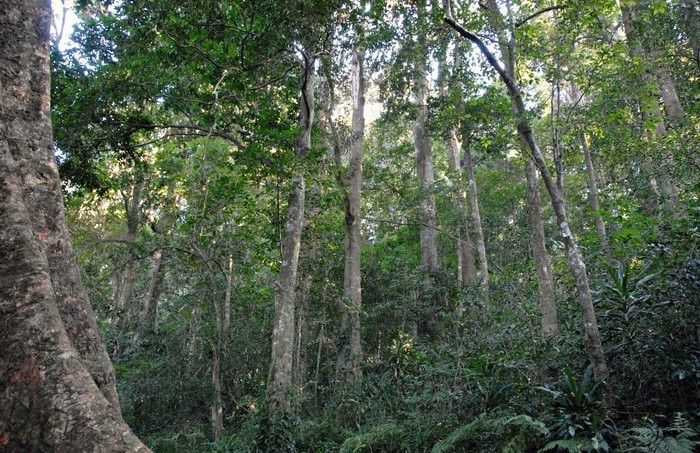
But as the road narrows, it leads to a thicket of indigenous trees standing tall with a wide canopy. Beneath the trees, the ground is clear offering a natural resting place where those seeking refuge from the heat can sit and cool off.
Among them is Samwel Ouma, a 55 Year-old father of four. He works as a casual labourer at a nearby construction site and is the proud owner of this unique forest patch. On this particular afternoon, he sits on a wooden bench under the shade of a towering fig tree.
“The temperatures these days are unbearable,” Ouma says. “But this forest with indigenous trees provides shade, a cooling effect, and is home for birds and wildlife.”
Ouma’s small forest has become a sanctuary for both people and nature. Locals and passersby alike know it as a birds and wildlife conservancy. On any given day, one can spot weaver birds, doves, and small antelope species seeking shelter among the trees.
Yet, step just outside Ouma’s property and the contrast is stark. The neighbouring lands are dry and bare. The air feels heavy, rivers have shrunk to narrow trickles, and the sound of birdlife is replaced with silence. Farms struggle to yield, and harvests are often disappointing.
Why Indigenous Trees Matter
Indigenous trees and shrubs are not just ornamental; they are the backbone of healthy biodiversity and vital for human well-being. Many indigenous species, such as the nitrogen-fixing acacia trees, enrich the soil naturally. Their leaves contribute to compost and mulch, reducing dependency on chemical fertilizers.
Moreover, some species hold deep cultural and spiritual significance in Kenya. The fig tree is considered sacred by several ethnic groups. It serves as a venue for traditional ceremonies and rituals, signifying its role beyond ecology.
Unfortunately, many indigenous trees are now endangered due to widespread deforestation, land conversion for agriculture, overexploitation, and charcoal burning. This loss is not just a local problem. It’s a national and global issue contributing to biodiversity loss, soil erosion, erratic weather patterns, and reduced food security.
That’s why Ouma decided to take action.
“I realized in good time that indigenous species were disappearing at a breakneck speed. I decided to do things differently in preserving what I already had,” he says.
His effort, though small in scale, echoes global initiatives. Kenya is part of international commitments such as the Bonn Challenge, a global effort that began in 2011 with a target to restore 150 million hectares of deforested and degraded land by 2020. Kenya specifically aims to plant trees on 5.1 million hectares of degraded land as part of its contribution.
Additionally, organizations like UN Environment and the Food and Agriculture Organization (FAO) are spearheading the UN Decade on Ecosystem Restoration. Their joint efforts aim to reverse ecosystem degradation worldwide by 2030.
The Role of Community-Led Conservation
What makes Ouma’s story stand out is that it is community-driven. Unlike government-led afforestation programs that often rely on exotic species like eucalyptus or grevillea, community members like Ouma focus on indigenous species. These trees are better adapted to local climate conditions, require less maintenance, and provide long-term environmental benefits.
Such initiatives also foster local employment and education. Youth groups in Siaya County, for example, have begun engaging in tree nursery projects, focusing on indigenous species like croton, acacia, and African olive.
In Conclusion
By planting, protecting and valuing indigenous species, individuals and communities in Siaya County and across Kenya can build a more resilient and sustainable future.
Comments