
.jpg)
Climate Change As A Contributing Factor To The Death Of Fish In Lake Victoria
Fish cage farming has become a common economic activities within lake Victoria and has since faced tremendous growth since the year 2016 as per a study conducted by Kenya Marine and Fisheries Institute. (KMFRI)
However, Despite the existence of aquaculture through pond and cage fish farming for supplementing the supply of white proteins, Kenya still fails to meet the demand, necessitating the importation of fish from other countries according to the study.
This is due to some of the challenges faced by the fish cage farmers in the process of meeting the gap of fish scarcity with be biggest challenge being the death of fish in the cages
Some of the fish cage farmers who have been greatly affected by these deaths include Mr Shalton Omollo who is one of the fish cage farmers in Ogal beach Kisumu county.
Mr Omollo taking to his facebook page confirmed losing close to ksh 2.3 million in November 2022 after waking up to the death of over 80,000 pieces of mature fish due to unclear circumstances in the beach.
“Today is Friday, 11th November. The day I dubbed as Elso Fish Friday. I woke up to go harvest my fish in Kisumu and other depots. This is is what I woke up to. All fish are dead; 80000 pieces of fish ready for harvest,”
A number of farmers also experienced the same challenge during that time around the beaches in Lake Victoria including Dunga Beach and Mulukoba beach in Busia in the year 2024 bring’ing them a lot of loss.
However different experts and research institutes have so far given opinions on what might have been the cause of those mass deaths and a number or the findings are connected to changes in climatic conditions within the lake
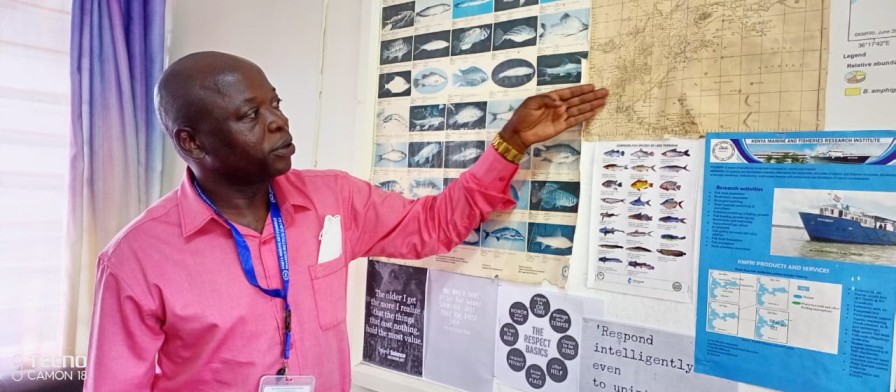
Speaking to KMFRI assistant director Mr Chris Nyamwea, he largely associated the deaths to the lack of oxygen within the lake brought by different factors including decay of plants within the lake, decay of the dead fish itself which uses oxygen and pollution within the lake.
"And when these fish die, the process of decaying begins, and when they decay that process also uses oxygen, so they further deprive water of oxygen making the water environment completely inhabitable for fish especially the Nile perch that has a high oxygen requirement",
said Chris Nyamwea, the assistant director of Kenya's Maritime and Fisheries Institute.
Mr Nyamwea also ruled out the allegations of poisoning within the cages.
These sentiments were echoed by the director of fresh water systems at KMFRI Dr Christopher Aura who also associated the deaths to the upwelling of the lake
“Fish die when there is upwelling — the process in which cold water from the deep rises to the surface. Displaced surface waters are replaced by cold, nutrient-rich water that wells up from below,”
explained Dr Aura during a media science café organized by the Media for Environment, Science, Health, and Agriculture (MESHA) at Dunga Beach.
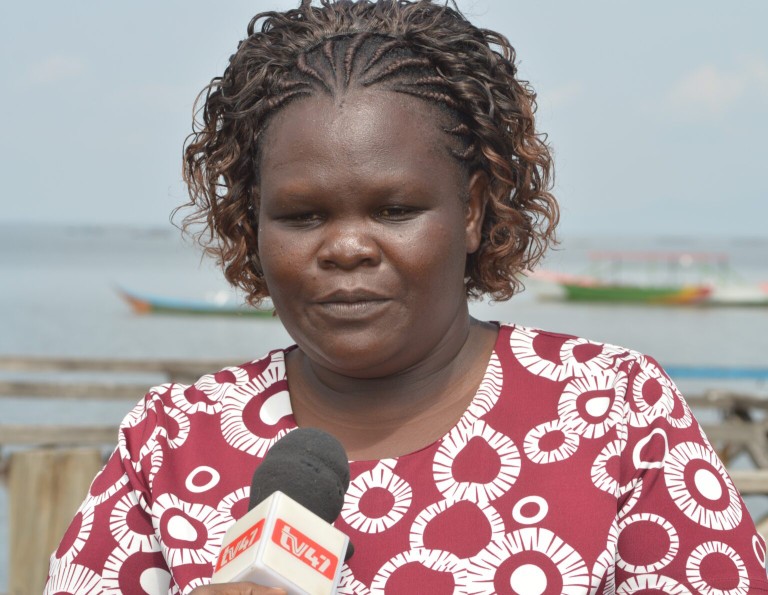
In a different media interview concerning the deaths in 2022, the director of Fisheries in the county government of Kisumu Susan Adhiambo also associated the deaths to the wrong placements of the cages advising fish cage farmers to look for expert opinions before erecting the cages within the lake
“The mass fish deaths of last year was a lesson on the correct cage location. We now sensitize the fish farmers so they don’t lose their investment,”
says Susan Adhiambo, Kisumu County’s Director of Fisheries.
Comments