
Farmers Increasingly Embrace Traditional Seeds To Adapt To Climate Change
In the villages of Siaya County, farming is no longer as predictable as it once was. Seasons that farmers relied on for years have changed, with rains either delaying, coming too early, or failing completely. For many small-scale farmers, the uncertainty brought by climate change has become one of the biggest threats to food production and livelihoods.
For Chrispine Ochieng’, a local farmer from Siaya Masiro Kathieno Indama village, preserving traditional seeds is not just farming practice but part of the life lessons he inherited while growing up with his grandparents after losing his parents at a young age. From them, he learned how to preserve indigenous seeds and understand traditional farming methods long before climate change became a major concern in the community.
Today, that indigenous knowledge is helping him adapt to harsh weather conditions alongside scientific weather forecasts.
“I grew up seeing my grandparents preserve seeds after every harvest,” says Chrispine. “At that time, I did not understand why it was important, but now I see the value because the weather has changed and farming has become difficult.”
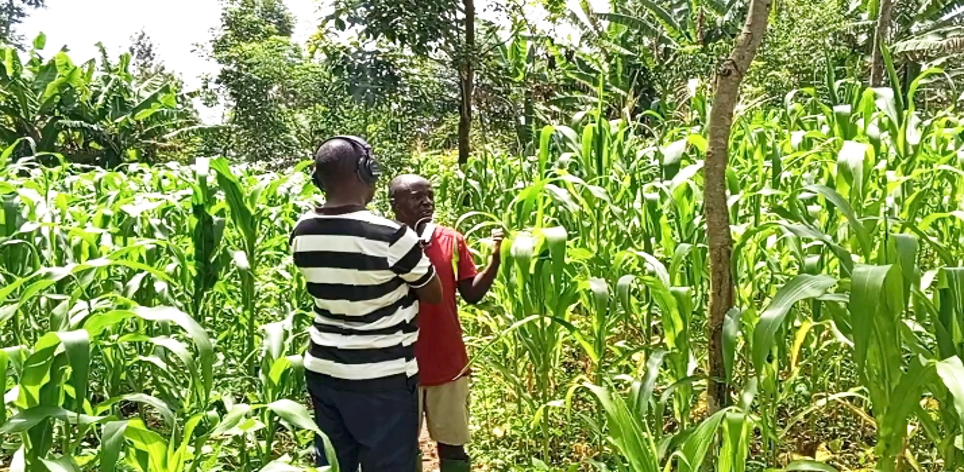
According to Chrispine, the weather updates have changed how farmers prepare for planting seasons.
After listening to this year’s March- April-May (MAM) seasonal forecast, which predicted early rains beginning in mid-February, he prepared his land earlier than usual and planted both preserved traditional seeds and improved seed varieties.
“The forecasts have been helping us because many times they come to pass,” he says. “When we hear the rains will come early, we prepare early. When they say the season may not be good, we know how to plan.”
For farmers who depend entirely on rain-fed agriculture, access to weather information has become an important tool in reducing losses caused by unpredictable weather.
But beyond weather forecasts, many farmers are now returning to traditional seeds as a way of surviving climate change.
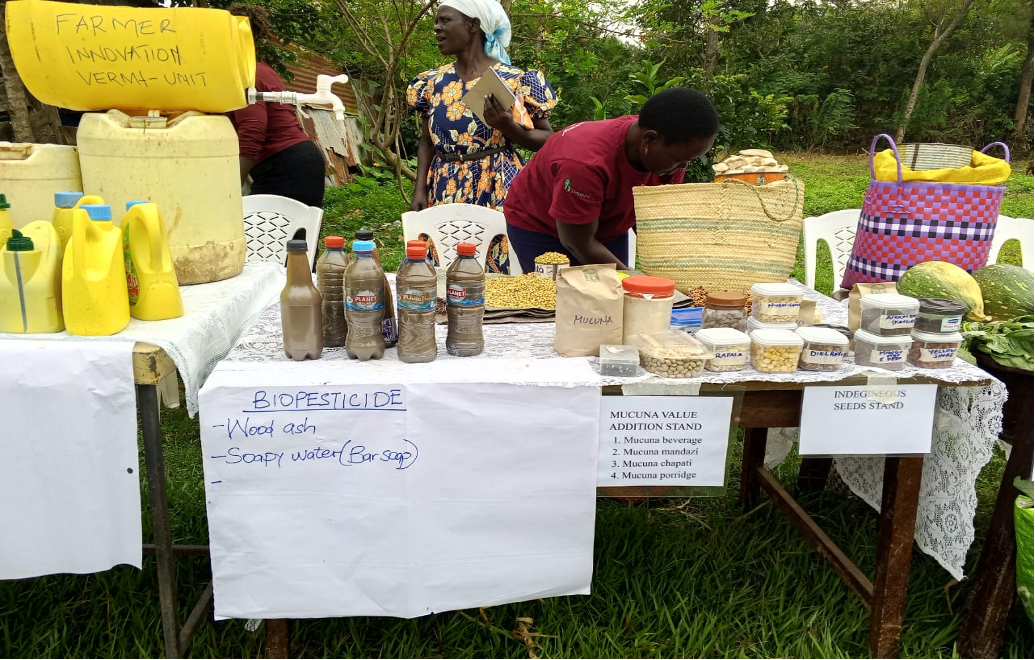
Across parts of Siaya, community seed banks are slowly becoming important centers where farmers preserve and share indigenous seeds that are considered more tolerant to drought, pests and changing weather conditions.
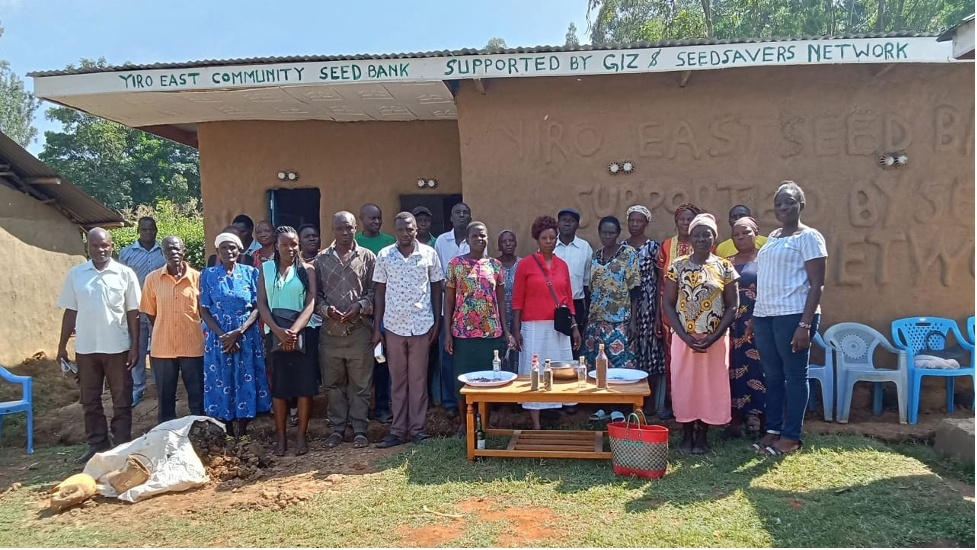
The initiative was supported by GIZ and implemented through Seed Savers Network in collaboration with local groups in Siaya, Kakamega and Bungoma counties. Farmers are trained on seed preservation, seed storage and preparation of organic manure as part of efforts to promote climate smart and organic farming.
Madam Mercy Ambani from Seed Savers Network says many small-scale farmers are struggling with the rising cost of farming inputs, especially seeds and fertilizers, yet climate change continues to affect harvests.
“Seed banks are helping farmers save money because they can access preserved traditional seeds locally instead of buying expensive seeds every season,” she says. “Farmers are also learning how to prepare organic manure, which reduces dependency on chemical fertilizers.”
She says traditional seeds are becoming increasingly important because many indigenous varieties can survive under harsh climatic conditions better than some modern seeds.
“Some traditional seeds can withstand drought and certain diseases. Even when rainfall is low, farmers can still harvest something,” she explains.
In Ambira, one of the areas where a community seed bank has been established, farmers say the initiative has already started changing lives.
One farmer who stores seeds at the seed bank says many farmers used to spend huge amounts of money buying seeds and fertilizers only for crops to fail because of poor rainfall or harsh weather conditions.
“Sometimes you buy seeds and fertilizer using borrowed money, then the crops fail to germinate because the rains stop,” she says. “But with traditional seeds and organic manure, the losses are lower because these seeds are stronger.”
Despite the growing interest in indigenous seed preservation, stakeholders say there are still challenges affecting the programs.
According to farmers and seed preservation groups, traditional seeds are not fully recognized under Kenya’s seed and plant regulations. They argue that the Seed and Plant Varieties Act limits farmers from freely exchanging and selling indigenous seeds.
There are also concerns over bio-piracy, where individuals obtain traditional seeds from communities, breed them, register them commercially and later sell them back to farmers through agrovet shops.
Madam Ambani says there is need for more support in documenting traditional seed varieties preserved in community seed banks.
As climate change continues to affect food production, the Siaya County Government is increasingly encouraging organic farming and preservation of indigenous seeds.
Eliakim Ambanjo from the county government department agriculture says traditional seeds are important in sustaining organic farming because they are naturally adapted to local conditions.
“Seed banks are expected to preserve many types of traditional seeds including maize, millet, cassava, vegetables and sweet potatoes,” he says. “Farmers should continue planting indigenous crops so that these seeds do not disappear.”
According to him, many traditional seeds are resistant to plant diseases and can still perform well even when rainfall is low.
“Climate change is affecting agriculture everywhere, but indigenous seeds are helping farmers remain food secure because they can survive difficult conditions,” he says.
In Ugunja, the project is being implemented through Tembea Youth Center for Sustainable Development and Ecosastinet with support from GIZ.
Joshua Omondi Amollo, a project officer working with the initiative, says there are currently three seed banks established in Got Osimbo, Iro and Ambira.
He says communities are being encouraged to bring traditional seeds for preservation so they can be safely stored and shared among farmers during planting seasons.
“The idea is to make sure farmers do not struggle every season looking for seeds,” says Joshua. “When seeds are preserved properly in the seed bank, farmers can access them easily and plant on time.”
According to him, climate change has made it necessary for communities to rethink farming practices and return to crops that can survive extreme weather.
“Whenever there is drought or too much rainfall, many modern seeds are affected,” he says. “But some traditional seeds are able to survive the harsh climate better.”
Farmers involved in the project say combining weather forecasts with indigenous farming knowledge is helping communities improve food production despite climate change.
Moses Odipo Masinde Ambira seed bank manager says farmers now coordinate planting seasons after listening to weather forecasts aired on Tembea Radio.
“In the past, some people planted early while others planted late because they did not know when the rains would come,” he says. “Now farmers listen to the forecasts and prepare together.”
According to him, proper timing has helped reduce losses caused by birds, theft and unpredictable weather.
“With traditional seeds and weather information, at least farmers are assured of getting some harvest even when the season is difficult,” he says.
Another farmer, Eunice, says access to preserved seeds and training on compost manure preparation has reduced farming expenses.
“Nowadays we do not struggle so much to buy seeds,” she says. “The compost manure we learned to prepare stays longer in the soil and improves soil fertility.”
As climate change continues to threaten food security, community radio programs are increasingly playing a key role in connecting farmers with experts and practical solutions.
Through programs aired on Tembea Radio and supported by BBC Media Action and Tembea youth centre for sustainable development through GIZ more farmers in Siaya are now embracing weather information, organic farming and indigenous seed preservation as part of efforts to adapt to climate change and secure future harvests.
For farmers like Chrispine, the combination of indigenous knowledge and scientific weather forecasts is slowly restoring hope in farming despite the growing challenges brought by climate change.
Comments